


 In ex officio proceedings concerning an alleged infringement of competition law by Vaillant d.o.o., Belgrade, the Commission for Protection of Competition found that the company had concluded restrictive agreements having as their object the significant restriction, distortion and prevention of competition within the meaning of Article 10 of the Law on Protection of Competition. Accordingly, the Commission imposed a competition protection measure amounting to RSD 15,569,280.00.
On 19 January 2023, the Commission for Protection of Competition opened ex officio infringement proceedings against Vaillant d.o.o., Belgrade, a distributor of heating equipment under the “Vaillant” and “Protherm” brands, on the basis of a reasonable suspicion that the undertaking had imposed resale prices for those products in the Republic of Serbia, thereby engaging in resale price maintenance (RPM). The Commission also carried out a dawn raid at the undertaking’s business premises.
Prior to initiating the proceedings, the Commission compared the wholesale and retail prices from the price list of Vaillant with the retail prices displayed on the websites of certain authorized distributors and determined that they are identical, both among all of the observed retailers, and against the prices from the price list available on the website of Vaillant. Moreover, based on the available data, the company Vaillant is not present on the retail market of products of the “Vaillant” and “Protherm” brands, but only through its distributors.
The Commission found that, since 2017, Vaillant had operated a business model based on the wholesale distribution of Vaillant and Protherm branded products to its distributors under identical or substantially similar terms and conditions. The distributors were periodically supplied with identical price lists specifying wholesale and retail prices, which they were expected to implement and pass on to their downstream customers throughout the distribution network. In addition, they received a rebate policy prescribing the discount structure to be adhered to by the distributors and all other members of the distribution network. Under the rebate policy, discount rates differed depending on the product type, the brand in question, and the customer segment. The evidence showed that Vaillant actively enforced and monitored the consistent application of prices for Vaillant and Protherm products. Vaillant concluded separate agreements with retailers and installers in its distribution network for alleged market-development services. Pursuant to those agreements, it provided financial incentives once the recipients submitted invoices from which the resale prices of the products could be ascertained. Conversely, Vaillant refrained from paying incentives that traders had come to expect in cases where they deviated from its pricing policy, even where the agreed sales volumes had been met, thereby rendering the withholding of such incentives a punitive measure.
The core of this type of infringement is that a supplier of a product restricts its buyer (and/or other buyers within the distribution network, including retailers) from independently and freely setting resale prices in downstream sales. This substantially restricts competition between retailers of the same brand, removes the possibility of retail price competition, and thereby prevents price reductions at the retail level, to the detriment of consumers.
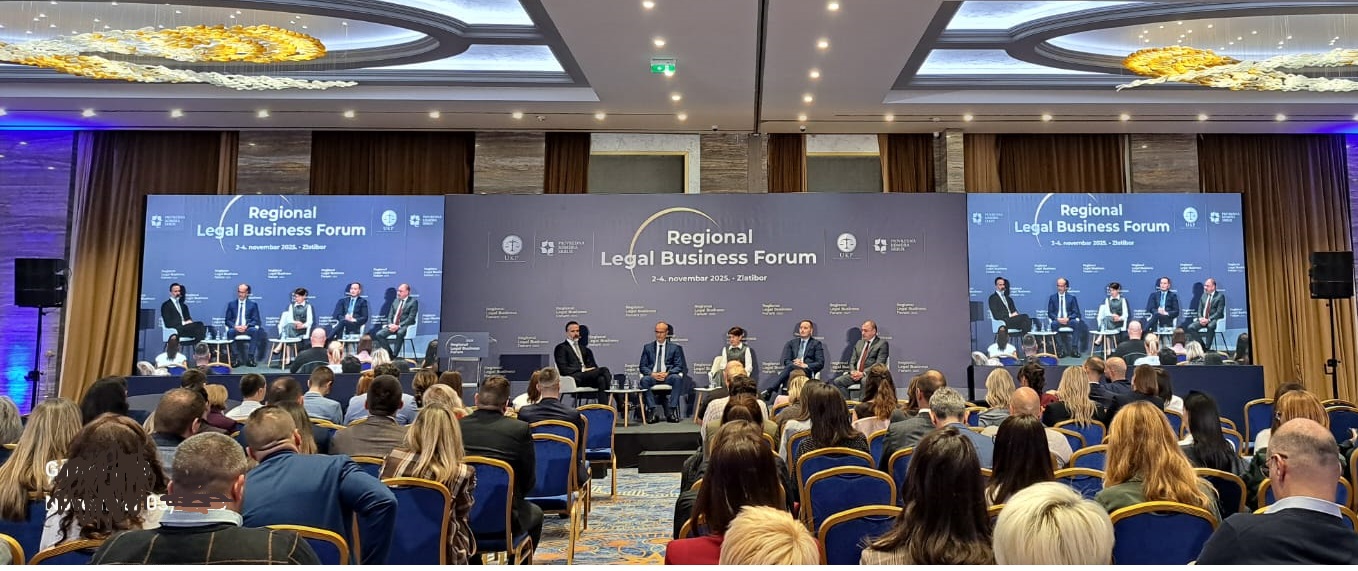 Siniša Milošević, Member of the Council of the Commission for the Protection of Competition, took part as a panelist on competition policy at the Regional Legal Business Forum 2025, the leading annual event for corporate lawyers in the region, held this year in Zlatibor.
 Representatives of the Commission for the Protection of Competition participated in a consultation held in Belgrade, organized by the Association of Corporate Lawyers in cooperation with the Chamber of Commerce and Industry of Serbia (PKS).